Sporting Organizations Need a Communications and Media Policy
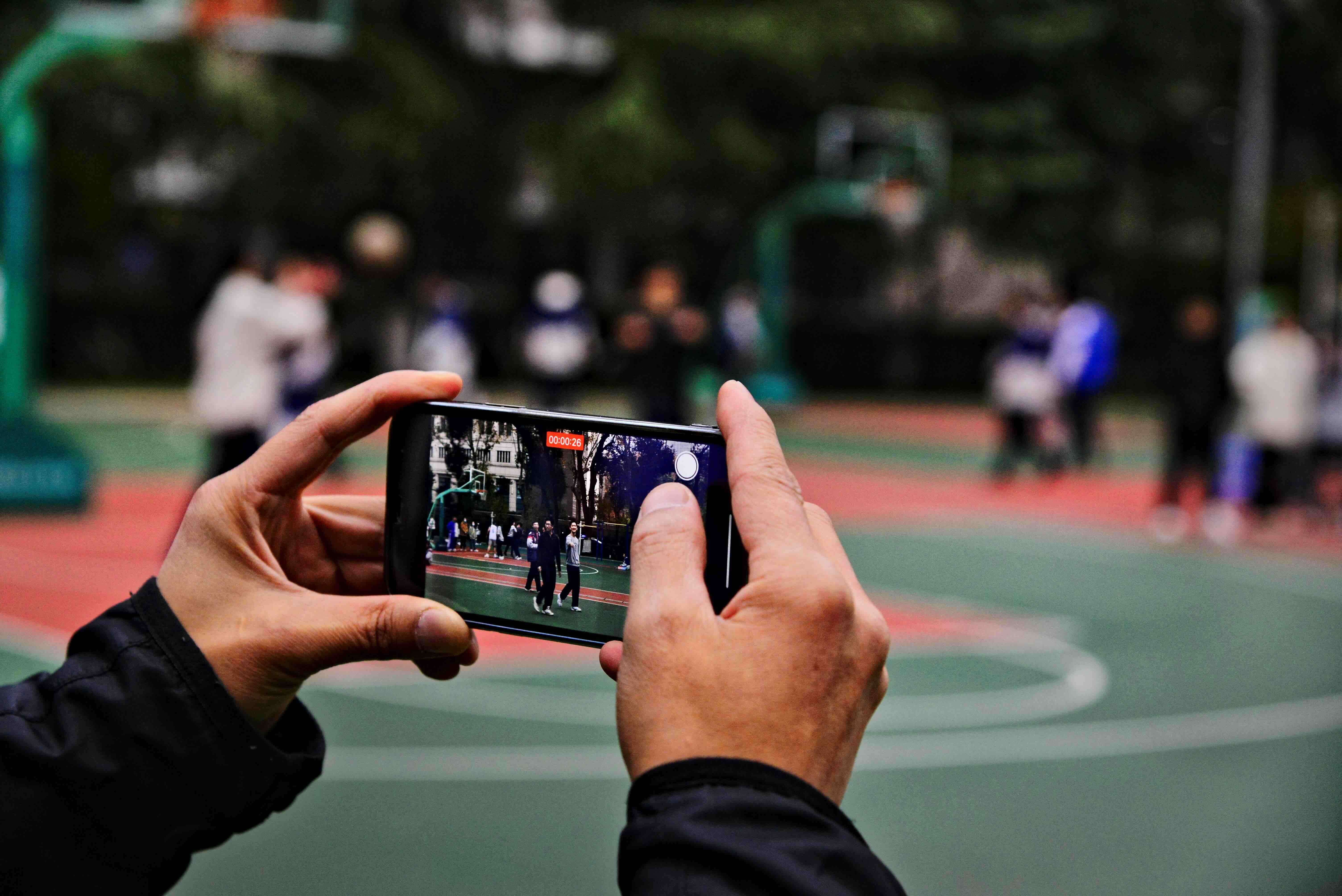
When we think of sporting environments, we think of the field, the locker room, the barn, the pool, the court, the competition venue. What we may not think about is the constant communication between athletes and sport authority figures. We may not think about the photos and videos taken and shared online. Teams share posts, organizations promote events, the media may be involved, and private messages may occur.
These digital components regarding everyday interactions may seem routine, but they carry safeguarding risk.
We rarely think twice about digital communication or sharing photos these days, but these realms often blur boundaries or lead to information being distributed without consent. Or when cases of abuse or misconduct arise, poorly handled communication can cause additional harm.
This is why sporting organizations must consider communications and media integral to their safeguarding responsibilities.
A Communications and Media Policy works to establish expectations for how an organization and its members – staff, coaches, trainers, athletes, volunteers, etc. – communicate publicly, privately, digitally, and how they handle media.
By setting expectations proactively with a strong policy, organizations help protect athlete safety and privacy, support healthy boundaries between organization members, communicate effectively when something goes wrong, protect confidentiality, center athlete choice and consent, and create consistency and accountability.
The goal is not to prevent people from communicating or sharing photos or interacting with the media, but to create clear expectations for safe and responsible digital communication, media distribution, and interaction.
The example Communications and Media Policy below provides a starting point that sporting organizations can adapt to their unique community.
#WeRideTogether provides pro bono consultation services for any organization with specific safeguarding needs or concerns. For support in developing your organization's unique Communications and Media Policy specific to your sport, structure, scope, and safeguarding requirements, reach out to info@weridetogether.today.
If you or someone you know needs support, visit our crisis resources.
Kathryn McClain, MSW, MBA
Program and Partnerships Director at #WeRideTogether
kmcclain@weridetogether.today
Legal Disclaimer
#WeRideTogether provides general information that is intended to guide parties as to safeguarding best practices. We endeavor to keep our information current and up-to-date, but there is no guarantee of accuracy or that the information is complete. #WeRideTogether strongly encourages you to independently research and verify the information and to generate your own content. The information does not constitute legal advice. In this regard, you should not rely on any statements or representations made on this website or any third-party Internet sites referenced herein for legal advice or for any other purposes, and should consult an independent attorney for legal advice. #WeRideTogether does not assume any responsibility for actions or non-actions taken by people who have visited this site, and no one shall be entitled to a claim of any nature based on the information provided on this site, whether expressly, impliedly, or otherwise.
Communications and Media Policy Example
[Organization Name] will ensure that all images of children, young people, and vulnerable adults it uses for internal or external communication, in whatever format, are appropriate and do not exacerbate risks to them.
Specifically, [Organization Name] will ensure that:
- Parents/guardians/carers must have filled out the Media Consent Form. If applicable, partner organizations will need to sign a release stating that young people present at the event have consented to be featured in photographic or video content.
- No content specifically portraying children, young people, and vulnerable adults will be used unless [Organization Name] is confident that informed consent has been provided.
- Images or content refer to all images in whatever format they are taken, including photos and videos.
- Inappropriate images of children, young people, or vulnerable adults (e.g. that could be deemed to be sexual or to portray nudity) will never be used.
- Images of children, young people, or vulnerable adults that portray them in a demeaning or disrespectful light will never be used. The image(s) should preserve the dignity of the children, young people, and vulnerable adults, as well as be respectful and truthful reflections of the immediate and wider context.
- Images of children, young people, or vulnerable adults will not be accompanied by personal identification information such as name and place of abode, where this could make the individual easily identifiable and traceable.
- The use of images of children, young people, or vulnerable adults where the individual has already suffered abuse will not be used unless additional protections, such as the use of their voice only, a pseudonym used, location never revealed, or the individual does not appear in any visual footage, are in place, unless there are absolute exceptional circumstances.
- Only cameras or other recording devices belonging to [Organization Name] or [Organization Name] staff members or contractors acting on behalf of [Organization Name] should be used to capture content. No one at a program visit or event should take or publish photos and recordings of children, young people, and adults under care.
- All images of children, young people, and adults under care will be stored securely to ensure compliance with [Organization Name] Safeguarding Policy and data protection law. This means that all hard copies will be kept in a locked drawer, and electronic images will be kept in a protected folder with restricted access. Images of children, young people, and adults under care will never be stored on unencrypted portable equipment such as laptops, memory sticks, and mobile phones.
- Images should be used to celebrate the achievements of children, young people, and vulnerable adults, [Organization Name], and our partners, and you should not record photos/videos and messages that potentially stereotype, sensationalize, or discriminate against people, situations, or places.
If you have any doubts about compliance with the above code of conduct or usage principles, consult the Safeguarding Officer. Violation of the code of conduct and usage principles may result in [Organization Name] disciplinary action.
In regard to online interactions and communications, [Organization Name] requires that:
- Use language and behavior towards children, young people, or vulnerable adults that is at all times appropriate and in no way harassing, abusive, sexually provocative, or demeaning, independently of your medium of engagement.
- Ensure that interactions between children, young people, and vulnerable adults are always observable and interruptible. This applies to online contact across any medium.
- Use positive, non-violent methods to manage a child, young person, and vulnerable adults' online and offline behavior; and raise any concerns of inappropriate behavior immediately.
- Only use the programs approved and assigned online platform when communicating, in which case conversations and interactions are observable and interruptible.
- Reinforce professional boundaries with children, young people, and vulnerable adults who begin personal communication. Do not give or receive contact information of any kind, e.g., email, phone number, social media handles, etc., with a child, young person, or vulnerable adult.
- Do not socialize with a child, young person, and/or vulnerable adult online in a private or personal context; do not connect, follow, add, or communicate with children under 18 on social media or their personal phone or email address.
- Do not post any personal information, images, or videos of children under 18 on your social media, and always be aware of data protection regulations.
- Be mindful of the collection, storage, and disclosure of children's, young people's, and vulnerable adults’ personal information and/or images/content, and comply with the Safeguarding Policy and the online platform’s Privacy Policy.
- Do not take or publish screenshots in which children, young people, or vulnerable adults appear.
- Do not expose children, young people, or vulnerable adults to inappropriate material online.
- Do not act in ways intended to shame, humiliate, belittle, or degrade a child, young person, or vulnerable adult, or otherwise perpetrate any form of abuse, Online or Offline.
- Do not engage in any behavior that may constitute grooming.
[Organization Name] aims to provide a safe and enjoyable experience for every child, young person, and adult under care. To help us do this, please note the following:
- We recognize the need to ensure the welfare and safety of all children, young people, and adults under care. We have a Safeguarding Policy that details welfare and safety initiatives, the Code of Conduct, and Reporting Procedures.
- [Organization Name] produces a range of communications resources to share the impact of our work. This may be shared via our own channels as well as our partners. Your story/image/project may feature on social media, in national or regional media or emails to our supporters, internal and external reports and fundraising materials or films.
- We have the above Guidelines for Communication and Media that set out how photographs and videos of children and other people involved in our activities should be taken and shared. We will take all steps to ensure images of children, young people and at-risk adults are used solely for the purposes they are intended. If you become aware that these images are being used inappropriately, or aware of a safeguarding incident or concern, you should inform the [Organization Name] Safeguarding Officer.
Child/Young Person/Adult Under Care: please read the following consent form and discuss it with your parents/guardians, then fill in the form if you are happy to do so.
Parents/Guardians: please read and discuss this consent form with your child or young person/adult who cannot provide their own legal consent (e.g. if they are under 18 years old or under care), and then, if you are happy to do so, fill it in.
I, _________________________, for myself and, in the case of a child under the age of 18 (the "Minor"), for myself and/or the Minor in my capacity as the Minor's parent/guardian, agree as follows:
- I am age 18 or older.
- This Release shall be binding upon the Minor and me, and our respective successors, heirs, assigns, executors, administrators, spouses, and next of kin.
- I hereby consent to the recording of statements, photographs, and/or audio or video recordings taken of the Minor and/or me, as applicable, at [Organization Name] events by [Organization Name] or any of its affiliates and their respective agents, contractors, or employees (collectively, the “Material”).
- All Material may be used, edited, published, or distributed by [Organization Name] and/or its affiliates for commercial and/or other purposes as determined by [Organization Name] anywhere in the world in its sole discretion. Neither the Minor nor I shall have any right to control the use or publication by [Organization Name] or its affiliates of the Material.
- All Material taken of the Minor or me by [Organization Name] or its affiliates shall be the sole property of [Organization Name] and its affiliates. Neither the Minor nor I shall receive any compensation in connection with the use of the Material for promotional, commercial, or other purposes.
- On behalf of the Minor and/or myself, as applicable, I hereby release, waive, and discharge any claims of any kind or nature arising out of or relating to the use of the Material against [Organization Name] or any person or firm authorized by [Organization Name] to publish said materials (“Publisher”). Such release, waiver, and discharge shall also extend to all affiliated companies, shareholders, directors, officers, employees, contractors, agents, and assigns of [Organization Name] and any Publisher.
- I HAVE READ THIS DOCUMENT, AND I UNDERSTAND THAT I GIVE UP SUBSTANTIAL RIGHTS ON BEHALF OF THE MINOR AND MYSELF (INCLUDING RIGHTS RELATING TO PUBLICITY AND PRIVACY WITH RESPECT TO THE COMMERCIAL USE OF THE MATERIAL), AND I SIGN THIS RELEASE FREELY AND VOLUNTARILY.
Printed Name of Minor (under 18): .....................................................................
Printed Name of Parent/Guardian: ...................................................................
Signature of Parent/Guardian: .........................................................................
Date: .................................................................................................................
OR
Printed Name of Individual (18 or over): .............................................................
Signature of Individual: .....................................................................................
Date: .................................................................................................................
If you have questions, concerns, or changes to these forms after submission, please contact the Safeguarding Officer.
[Organization Name] Safeguarding Officer:
NAME
EMAIL
PHONE