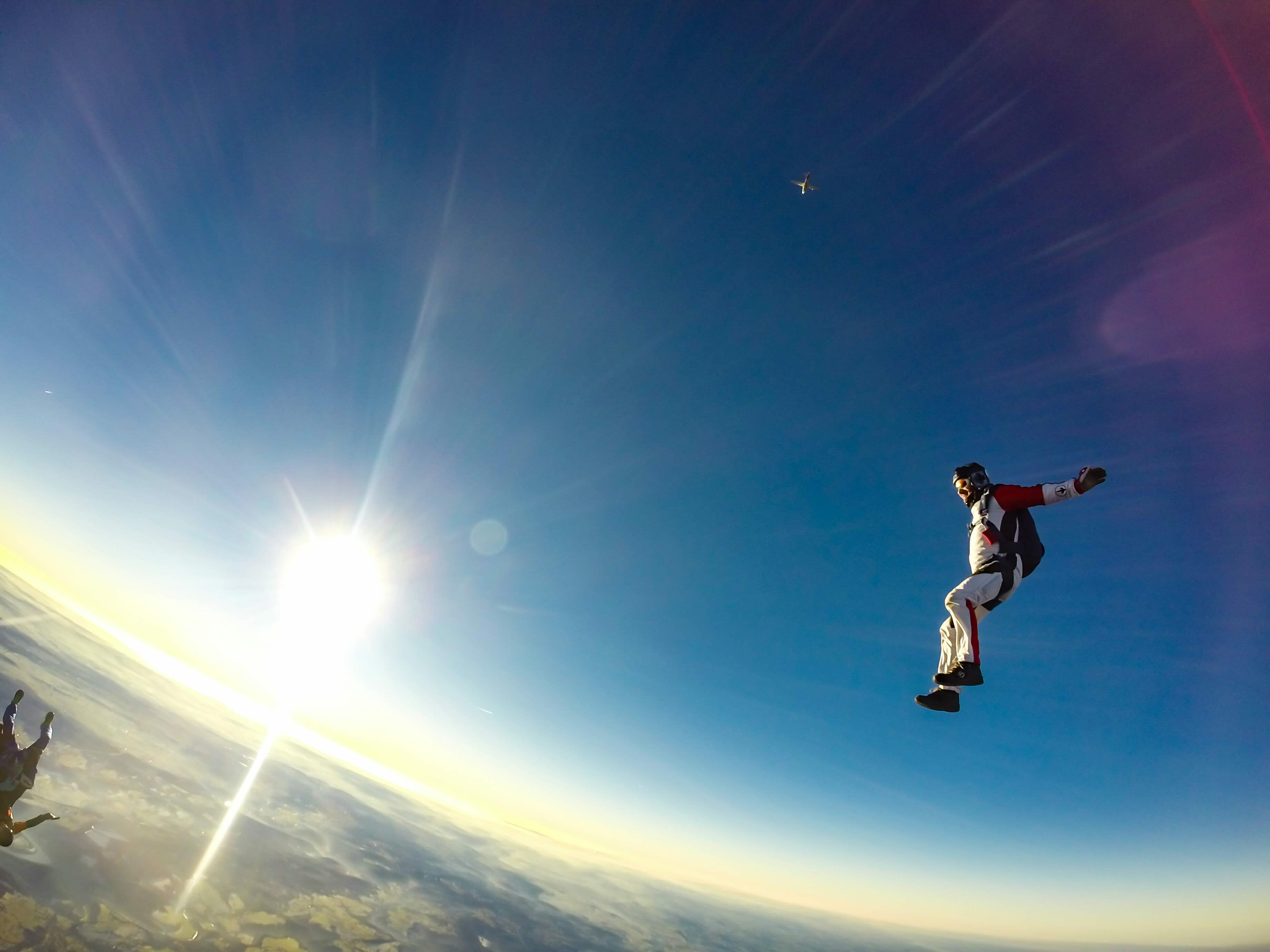
Sports and extreme sports are evolving. Athletes are innovating. We can see this at the X Games and at the Winter Olympics, from riders doing tricks that didn’t exist a decade ago to figure skaters making quad jumps the norm to skiers jumping higher and going faster.
It’s happening in skateboarding, break dancing, climbing, biking, and other extreme, action, and lifestyle sports like skydiving and surfing. Athletes are pushing past old limits. As points are awarded for creativity, flow, style, and risk, new skills and performances are unfolding, with pioneering often necessary to remain competitive.1
Yet, these progressions are occurring without safeguards in place. There is an overarching absence of safeguarding policies, codes of conduct, safe hiring practices, response and reporting protocols, risk assessments, and preventative education.
Nevertheless, these athletes and sports are thrilling and exciting to watch and follow. For some, they are irresistible to join in on, whether you are seeking sensations, camaraderie, freedom, a challenge, or a tool to self-regulate.2 With the extreme sport market growing to “bring in over $200 billion per year with around 490 million participants globally,” safeguarding must keep up.3
While safeguarding has predominantly focused on abuse and misconduct, it also must progress to meet the needs of this era of athletes and sport. Safeguarding must evolve, not to limit the freedom or innovation, but to support and protect these young athletes, who face increased risk and pressure.
Who are these innovative elite athletes?
They often have specialized early. They have progressed rapidly. They usually self-select and do not deviate from their own convictions.4 Whether it was a sport they learned from their family or their local environment, or one they were inspired to try after seeing a video on social media, risk becomes part of their identity.
They found a niche, peer-driven community with its own subculture, breaking through norms and limits. Their risks are often positively reinforced by society as well.5
What factors are at play?
- Achievement at a young age. Success can come quickly, often before adulthood, “such that by the time these athletes reach their early and mid-teens, some are deeply entrenched in the action sports economy.”6 These young athletes may feel pressure to push through pain, fear, and doubt to be selected, funded, sponsored, or to win.7
- Commercial and media influence. Athletes must choose or balance a competitive career or a media-based career, both of which are heavily influenced by large corporations.8 Think Red Bull. Think Monster. Think influencers and sponsorships. The door is wide open for online abuse, exploitation, and curating a zeitgeist that is rarely in line with prioritizing the health and well-being of the athletes.9
- Unregulated sporting environments. Uncharted waters leave a lot of self and peer education. Sometimes there are no coaches involved, or coaching is highly specialized.10 Power imbalances are at play with tight-knit and 1:1 situations involving very highly aspirational individuals. Often, there is an absence of injury prevention protocols11, skill development progressions, safe hiring practices, and healthy boundaries, all creating an environment ripe for safeguarding concerns.
- Parental uncertainty. The parents may be pushing or encouraging the athlete12; they may be terrified but holding it in, or they may be ignorant of all the risks.
- Limited medical access. There is a lack of medical care in areas where the athletes are out in the backcountry, on the side of a cliff, or up in a plane.13
- Huge variance in risk assessment.14 We all define ‘risk,’ ‘danger,’ ‘normal,’ and ‘worth it’ differently. Everything carries risk and danger, but where do you draw the line for yourself, your child, or as a parent who participates in extreme sports?
- Developing brains and bodies. Young athletes may not fully comprehend the risks they are taking on or have the decision-making competence to do so.15 Consider, are they able to make healthy decisions and give informed consent?
As it stands, injuries in these sports are normalized.16 They are expected. They can even be a badge of honor. Risk, strain, and pain are part of it, as Olympian Lindsey Vonn has shared publicly. And sometimes athletes don’t make it out alive.17
Therefore, on the big screen and on your local mountain, we must ask who is safeguarding these innovative young athletes.
Who decides when risk becomes excessive?
What safety measures should be in place?
How do we guide skill development and progression safely?
Are we praising athletes for being smart and safe, or just for reaching new heights or doing the unimaginable?
Individuals choose their sport and the concurrent risks. However, collectively we can do more to ensure that risks are understood, mitigated when possible, and not compounded by negligence. The consequences and costs are personal and public, including emergency resources, long-term health and mental health care, and insurance burdens that impact families and public health systems.
For the protection of athletes and the future of extreme sports, we must safeguard the fearlessness that we celebrate.
This looks like:
- Events, competitions, and corporations stepping it up. Protected athletes are integral to sustainable profit! Increase safety supports, medical services, and environmental risk assessments to decrease concerns.
- Stronger consent processes. Improve consent waivers and warning labels wherever and whenever possible. Ensure that participants (and caregivers if the participants are minors) are fully informed of all risks associated with the activity through pre-activity communication, and have signed off on their understanding and acknowledgment of the danger.18
- Increase mental health support. These young athletes face internal and external pressure, combined with often life-or-death stress and consequences. They must be as equipped as possible to handle this mental load of reaching new goals, coping with setbacks and injuries, and public scrutiny.
- Teach risk assessment early.19 Individuals at different developmental stages will need different approaches to identify risk as they learn thinking, self-control, and emotional regulation skills to help keep themselves safe.
- Enforce minimum protections and regulations. In sports that are often unregulated, protection should not be optional, such as requiring helmets and protective equipment at the downhill mountain bike park and multiple gear checks for climbing and jumping.20
- Praise athletes for their choices. Whether they are pausing, taking a step back, or stopping, for their safety, well-being, or longevity, like Simone Biles at the Tokyo Olympics, celebrate athletes for taking care of themselves.
- Don’t forget about aftercare. Upon exiting the sport, extreme sports athletes may experience isolation, alienation, and physical and mental health consequences.21 Offer resources to help them transition and navigate the changes in their life.
- Advocate for safeguarding. This means increased research and formal safeguarding policies and procedures to protect these innovative athletes and sports.22
C’mon, safeguarding, keep up!
If you or someone you know needs support, please visit our Crisis Resources or Resources for assistance.
Kathryn McClain, MSW, MBA
Program and Partnerships Director at #WeRideTogether
kmcclain@weridetogether.today
Footnotes
- Immonen et al., 2017
- Hornby, 2024
- Hornby, 2024
- Vliet & Ingles, 2021
- Vliet & Ingles, 2021
- Caine & Provance, 2018
- Procházka et al., 2024
- Thorpe & Dumont, 2019
- Procházka et al., 2024
- Thorpe & Dumont, 2019
- Caine & Provance, 2018
- Walker, 2018
- Caine & Provance, 2018
- Martínková & Parry, 2017
- Grootens-Wiegers et al., 2017
- Caine & Provance, 2018
- Cohen et al., 2018
- Australian Adventure Activity Standards, 2019
- BBC Future, 2022
- Gregory, 2007
- Kalinowska et al., 2025
- Cohen et al., 2018
References
- Australian Adventure Activity Standards. (2019). Core good practice guide v1.0. https://australianaas.org.au/wp-content/uploads/Core-GPG-v1.0.pdf
- BBC Future. (2022, November 1). How to teach kids to make great choices. https://www.bbc.com/future/article/20221101-how-to-teach-kids-to-make-great-choices
- Caine, D. J., & Provance, A. J. (2018). Pediatric and adolescent injury in adventure and extreme sports. Research in Sports Medicine, 26(sup1), 5–19. https://doi.org/10.1080/15438627.2018.1434041
- Cohen, R., Baluch, B., & Duffy, L. J. (2018). Defining Extreme Sport: Conceptions and Misconceptions. Frontiers in psychology, 9, 1974. https://doi.org/10.3389/fpsyg.2018.01974
- Emery, C. A. (2018). Injury prevention in kids’ adventure and extreme sports: Future directions. Research in Sports Medicine, 26(sup1), 199–211. https://doi.org/10.1080/15438627.2018.1452239
- Gray, T., Down, M. J. A., Mann, J., Barnes, J., Sturges, M., Eager, D., Pigott, F., Harper, A., Hespos, S., & Monro Miller, R. (2025). Risky outdoor play and adventure education in nature for child and adolescent wellbeing: A scoping review. Behavioral Sciences, 16(1), Article 5. https://pmc.ncbi.nlm.nih.gov/articles/PMC12837311/
- Gregory, A. (2007, October 28). Keeping extreme kids safe in their extreme sports. Contemporary Pediatrics. https://www.contemporarypediatrics.com/view/keeping-extreme-kids-safe-their-extreme-sports
- Grootens-Wiegers, P., Hein, I. M., van den Broek, J. M., & de Vries, M. C. (2017). Medical decision-making in children and adolescents: developmental and neuroscientific aspects. BMC pediatrics, 17(1), 120. https://doi.org/10.1186/s12887-017-0869-x
- Heggie, T. W., & Küpper, T. (2018). Pediatric and adolescent injury in wilderness and extreme environments. Research in Sports Medicine, 26(sup1), 186–198. https://doi.org/10.1080/15438627.2018.1438280
- Hornby, O. (2024). What factors explain extreme sport participation? A systematic review. Frontiers in Sports and Health Psychology. https://pmc.ncbi.nlm.nih.gov/articles/PMC11286560/
- Immonen, T., Brymer, E., Orth, D., Davids, K., Feletti, F., Liukkonen, J., & Jaakkola, T. (2017). Understanding action and adventure sports participation: An ecological dynamics perspective. Sports Medicine - Open, 3(1), Article 18. https://doi.org/10.1186/s40798-017-0084-1
- Kalinowska, K., Paprocka, A., Świrk, U., Fijałek, P., Karczmarz, J., Gutowska, M., Kosińska, A., Belcarz, W., Orzechowska, J., & Orzechowski, M. (2025). The impact of extreme sports on mental health: Is “No Risk No Fun” a healthy approach? Medical Science, 29, 1–8. https://doi.org/10.54905/disssi.v29i157.e49ms3536
- Martínková, I., & Parry, J. (2017). Safe danger – On the experience of challenge, adventure and risk in education. Sport, Ethics and Philosophy, 11(1), 75–91. https://doi.org/10.1080/17511321.2017.1292308
- Procházka, D., Bočková, K., & Kazistay, N. (2024). Impact of sports sponsorship on early career athlete performance: Czech case study. Journal of Infrastructure, Policy and Development, 8, Article 9533. https://doi.org/10.24294/jipd.v8i12.9533
- Thorpe, H., & Dumont, G. (2019). The professionalization of action sports: Mapping trends and future directions. Sport in Society, 22(10), 1639–1654. https://doi.org/10.1080/17430437.2018.1440715
- Vliet, E & Ingles, E. (2021). Decision-makiing by extreme athletes: the influence of their social circle. Heliyon, 7(1). https://doi.org/10.1016/j.heliyon.2021.e06067.
- Walker, R. (2018). Kids and extreme sports. Outside Online. https://www.outsideonline.com/culture/active-families/kids-extreme-sports/?scope=anon