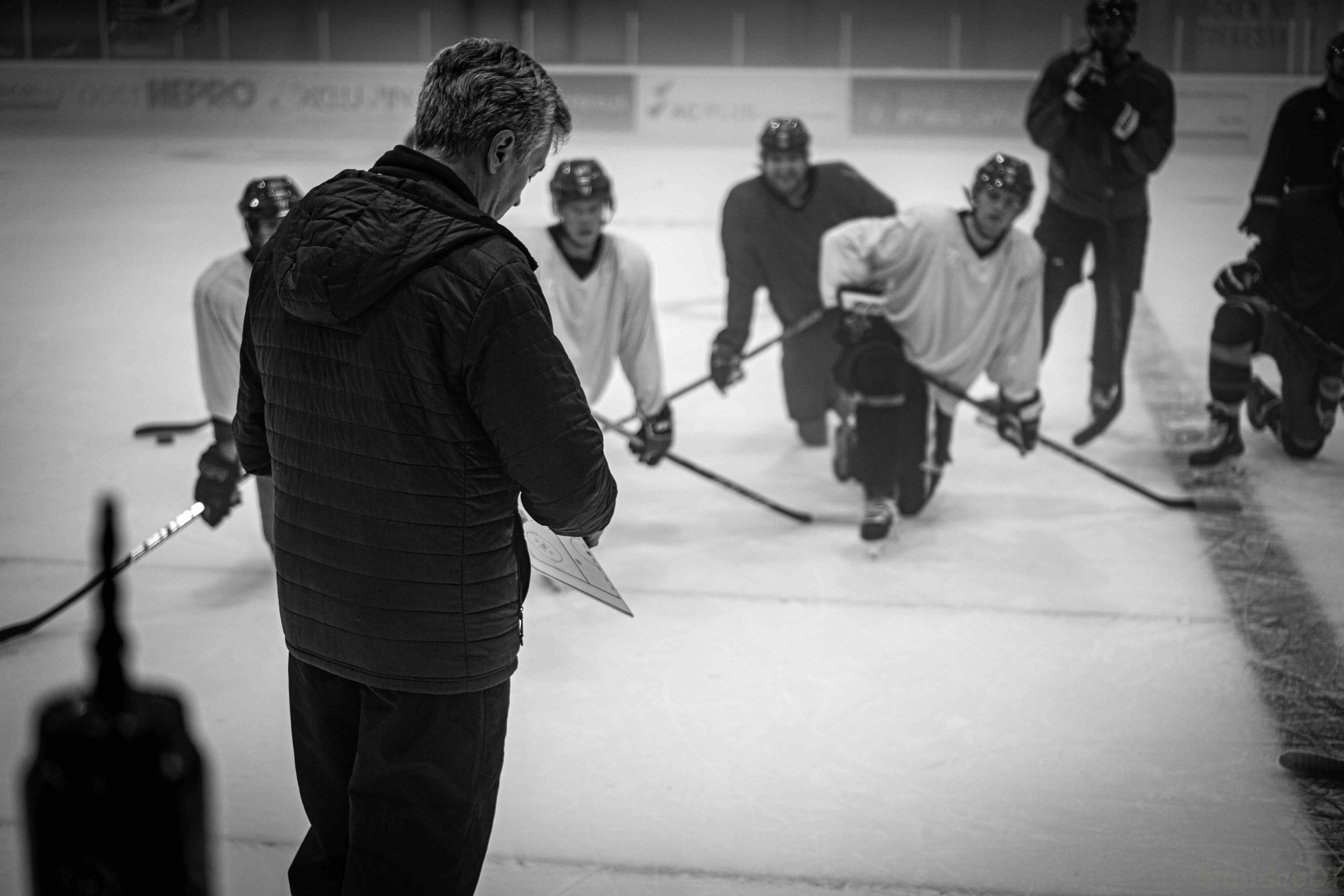
Coaches, trainers, instructors. All terms for someone who is highly valued for their passion, expertise, and heart in working with athletes and supporting athletes’ development inside and outside of sport.
In many communities and organizations, coaches are some of the most deeply loved, respected, idolized, and even worshiped individuals. Coaches typically spend extensive time with athletes, especially in the evenings and on weekends. Often, the stereotypical 9 am to 5 pm work schedule does not apply.
Coaches may be working in a volunteer capacity. This can look like moms and dads coaching their young child’s sports team after school. Coaches may have extensive experience; they may be new to coaching, or they may have been athletes themselves. Regardless, coaches have a huge impact on athletes, parents, and the sporting community.
What is inconsistent across sporting spaces, however, is the level of education, training, prevention support, and resources available to coaches through their organization. This can include skill-based training, first aid and CPR instruction, safeguarding, etc. And when coaching athletes, many other spheres of life may come into play, such as rest, recovery, diet, nutrition, and stress management. This can be a lot to navigate!
We don’t expect coaches to be experts in everything.
However, coaches, no matter what level of sport they’re a part of, do have a responsibility to educate themselves on safeguarding best practices. Coaches must be knowledgeable about physical safety, mental health, environmental safety, safeguarding, coaching, and how to navigate relevant organizations, governing bodies, and reporting processes.
#WeRideTogether is here to help fill that gap regarding safeguarding support and resources. We support and empower coaches to focus on the skills and sport at hand and positively influence their athletes. From working with thousands of athletes and hundreds of coaches across the globe, across a multitude of sports at various levels of play, we have answered many questions and developed a tip sheet of best practices for protecting athletes. This guide for coaches is evidence-based, athlete-centered, trauma-informed, and resource-packed. Furthermore, the information below also helps protect coaches themselves and their fellow coaching and organizational staff, keeping sporting environments safe and healthy for all.
For more information related to specific sports, check out our Find Your Sport page.
Find more information here related to: Reporting and Crisis; Legal and Justice; Student Support; Safety and Prevention; General Information, Questions, and Statistics; Coach Education; Physical and Mental Health; LGBTQIA+; Young Adult and Teen; Men and Boys; Military.
Additionally, #WeRideTogether has created several free tools to provide guidance and support for coaches, athletes, and parents, which can be found here.
Coaches’ Best Practices for Safe and Healthy Sport
Boundaries and Consent
- Respecting boundaries pertains to physical, verbal, emotional, and social boundaries.1 For example, healthy boundaries in sport look like only touching athletes for necessary, sports-related, and appropriate reasons, with consent; being mindful of language and topics discussed; not engaging with athletes outside of sport for personal relationships; and only communicating with athletes at appropriate times and via appropriate channels.
- Always ask for and honor consent. If you need to touch an athlete, be mindful of the power imbalance you hold. They may feel obligated to consent. Any contact should be sports-related and appropriate. Explain where you need to touch and for what purpose; ask and wait for a verbal yes; offer an alternative method to convey the instruction that does not require physical touch. This should all be done in observable and interruptible places.
- You are not expected to be, poised to be, or trained to be an expert on everything from mental health to menstruation to nutrition to anything outside of your sport. These semi-sports-related topics and tangential things may come up when coaching athletes and spending a lot of time with them, especially young athletes. You should not give advice, position yourself as an expert, or provide guidance or care outside your job description. What you are expected to do is recognize and respond when an athlete needs or asks for support. This looks like knowing how to access resources and referring athletes to the right sources.
Engage in Strengths-Based Goal Setting with Athletes
- Ultimately, it is not about your goals, the organization’s goals, or the parents’ goals; the sport is about the athletes. Sit down with all athletes regularly, including at the beginning, middle, and end of a season, to discuss goals and objectives.
- Goals should be athlete-driven. Your role as a coach is to help them make their goals realistic and concrete, and to provide action steps to achieve them. Focus on building strengths and highlighting the positives, and on growth areas most relevant to the athlete and that they are motivated to address. This helps build connection, closeness, commitment, and confidence for both the athlete and the coach as it puts everyone on the same page about priorities. Being transparent about realistic expectations leads to effective and successful coaching.2,3
- Example Goal Setting Questions:
— What is your favorite thing about playing your sport right now?
— What is one of your greatest strengths as an athlete?
— What would you like to accomplish this season?
— What do you want to work on this season?
— What would make this season feel like a success?
— What is something new you would like to learn this season?
— What do you need to help you succeed?
Engage in Strengths-Based Coaching
- A safe and healthy sporting environment is linked to high performance. It is your role as a coach to set the tone with your athletes. Research shows that psychological safety, feeling respected, supported, and challenged, helps athletes with their performance.4 Your leadership has a great impact on your athletes’ mental health, quality of life, and well-being.5 Conversely, maladaptive coaching practices carry a great risk of being normalized in sporting spaces for athletes, leading to further harm and violence and decreasing athlete performance and success.6
- Strengths-based coaching, such as being honest, fair, and respectful when giving feedback. This looks like focusing on the skill, rather than the person, when providing improvements. This looks like creating opportunities and recognizing effort, as well as following best practices when communicating with athletes’ parents.
- Examples of positive and constructive feedback:
— “Let’s slow it down and work through the movement together; you are making progress.”
— “You’ve done this before; what’s getting in the way today?”
— “That didn’t go how we hoped; what’s one thing we can improve for next time?”
- Your goal is to build athletes up. Practice compassion with your athletes in tough times to support team unity and performance.7 Given the prevalence statistics of abuse in sports and the challenges faced by athletes inside and outside of sport, assume that athletes on your team have experienced trauma. It is not your business to know that or investigate such, but to adopt trauma-informed coaching practices. This looks like shifting from ‘what’s wrong with this athlete’ to ‘this athlete may be experiencing something; how can I respond and assist in a supportive way?’
- Continue learning about athlete well-being and prevention education, especially healthy relationship dynamics, safe active bystander intervention, and types of abuse in sports.
Regulate through Self-Care
- Many coaches today feel overburdened, balancing pressures from parents and organizations while trying to ensure that athletes perform well.8,9 Coaches face high-stress situations, work long hours, and may not have many supports at their disposal. You must demonstrate emotional regulation before, during, and after practices and games.10 You are a role model for handling stress and managing the ups and downs.
- Support yourself by prioritizing balance outside of sport, such as taking time off, utilizing stress-management strategies, setting healthy boundaries, connecting with other coaches, and practicing self-care.
Advocate for Improvements in your Organization
- You are the one interacting with athletes daily on the court, field, track, pitch, etc. You know what needs and resources may be missing, and what supports would be helpful to have in place for you, your athletes, and their parents. You are poised to advocate for these changes in your organization; if you see areas for improvement, speak up.11
- These recommendations could include developing a clearer Code of Conduct, offering more safeguarding training, improving reporting and response pathways, or providing more resources for athletes and parents.
For assistance with implementing these best practices, please reach out to us at info@weridetogether.today.
Additional resources:
If you or someone you know needs support, visit our crisis resources.
Kathryn McClain, MSW, MBA
Program and Partnerships Director at #WeRideTogether
kmcclain@weridetogether.today
Footnotes
- USA Gymnastics, n.d.
- Jowett, 2024
- Liu et al., 2025
- Bates & McShan, 2025
- Runquist et al., 2025
- Liu et al., 2025
- Bates & McShan, 2025
- Schwab et al., 2025
- Quick et al., 2025
- Bates & McShan, 2025
- Yang et al., 2025
References
- Bates, S., & McShan, K. (2025). High school student-athlete perspectives on coach behaviors: Insights beyond the Xs and Os. The Sport Psychologist, 39(4), 248–259. https://doi.org/10.1123/tsp.2024-0160
- Jowett, S. (2024). The coach-athlete relationship within a cross-boundary team of experts: A conceptual analysis. International Review of Sport and Exercise Psychology, 1–16. https://doi.org/10.1080/1750984X.2024.2416968
- Liu, R., Wang, S., & Li, J. (2025). How coach leadership behavior influences athletes' performance: The chain-mediated role of the coach-athlete relationship and psychological fatigue. Frontiers in Psychology, 15, 1500867. https://doi.org/10.3389/fpsyg.2024.1500867
- Quick, S., Baghurst, T., & Lyle, J. (2025). The hidden struggles of elite coaching: How coaches (don’t) balance athlete welfare with the pressure to perform. Quest, 1–20. https://doi.org/10.1080/00336297.2025.2608612
- Runquist, E. B., Adenaiye, O. O., Sarzaeim, M., et al. (2025). Associations of abusive supervision among collegiate athletes from equity-deserving groups. British Journal of Sports Medicine, 59(17), 1124–1134. https://doi.org/10.1136/bjsports-2024-109579
- Schwab, L., Röthlin, P., Antonini Philippe, R., & Horvath, S. (2026). Exploring coaches' responses to interpersonal violence in sport: Recognition, severity perception, and likelihood of reporting. Journal of Interpersonal Violence. Advance online publication. https://doi.org/10.1177/08862605251408112
- USA Gymnastics. (n.d.). Setting healthy boundaries with athletes. https://static.usagym.org/PDFs/Member%20Services/scresources/boundaries.pdf
- Yang, P., Xu, R., & Le, Y. (2024). Factors influencing sports performance: A multi-dimensional analysis of coaching quality, athlete well-being, training intensity, and nutrition with self-efficacy mediation and cultural values moderation. Heliyon, 10(17), e36646. https://doi.org/10.1016/j.heliyon.2024.e36646